

 866-625-9377


November 19, 2026
-
Share:
-

-

-

-

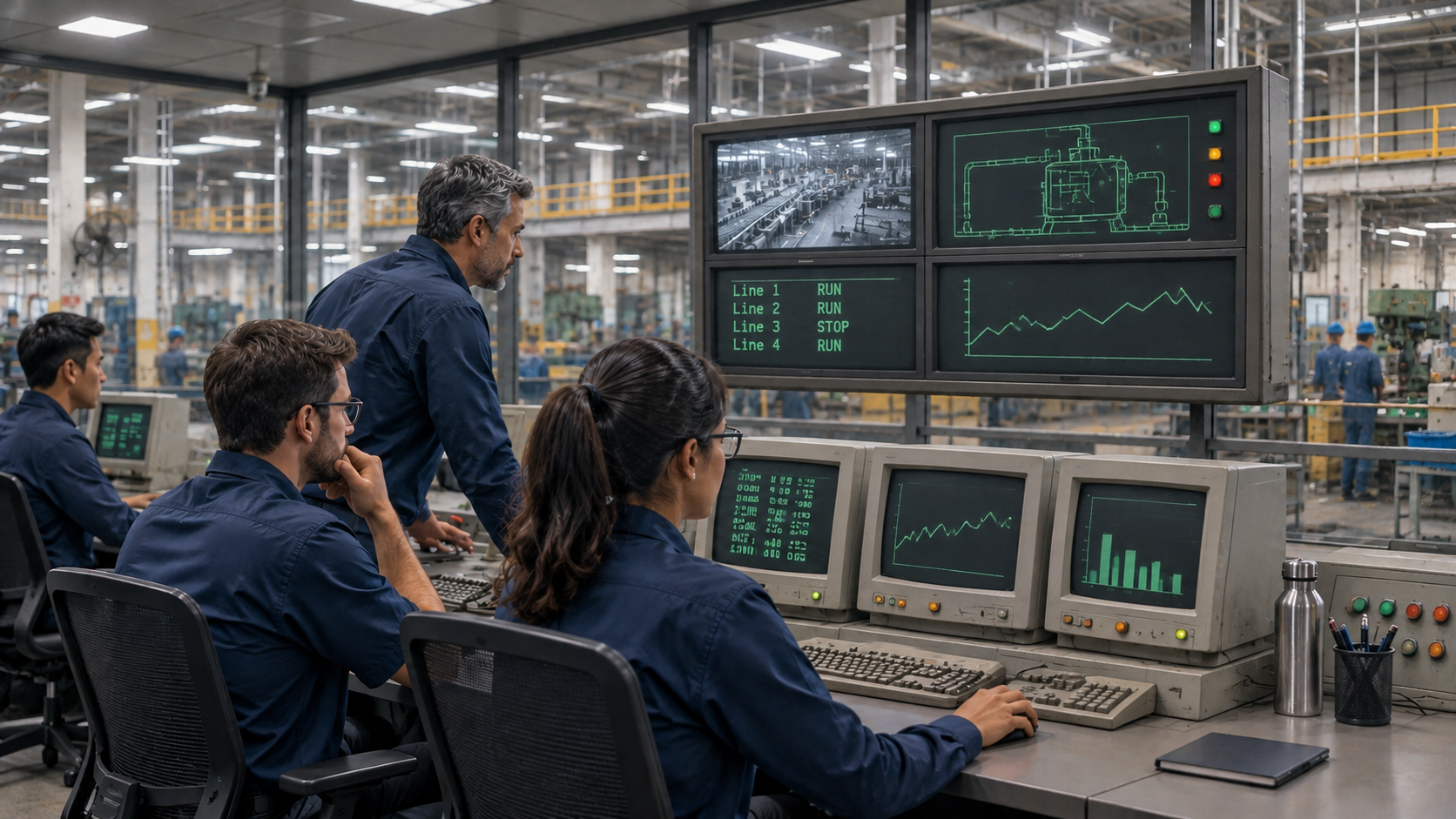 If you run IT at a mid-market manufacturer, you already know the bind. Your MES and ERP systems keep production running, but they were designed for a different era. Every integration request takes longer than it should, and your best people spend more time on workarounds than on strategic projects. Northern Lights Technology Development helps manufacturing organizations close that gap by turning legacy modernization from a multi-year risk into a disciplined, phased execution plan.
This comparison breaks down five legacy modernization service providers through the lens that matters most to manufacturing CIOs: can this partner modernize production-critical systems without disrupting operations? You will find evaluation criteria, a side-by-side feature comparison, and practical guidance for choosing the right model.
Quick guide: 5 best legacy modernization services for manufacturing
- Northern Lights Technology Development: The best custom application modernization partner for manufacturing organizations needing phased, production-safe delivery
- EPAM Systems: Engineering-heavy modernization for organizations managing large application portfolios and complex platform migrations
- Thoughtworks: Agile-led modernization paired with continuous delivery culture and internal team enablement
- Cognizant: Industry-focused modernization for manufacturers running multi-cloud or hybrid environments
- Infosys: Automation-driven modernization suited to organizations with large mainframe or legacy Java estates
How we chose the best legacy modernization services for manufacturing
Manufacturing modernization is not a general IT project. Your systems run production lines, manage quality controls, and feed real-time data to operations teams. A failed migration does not just create downtime. It stops the factory floor.
We evaluated each provider against criteria that reflect how manufacturing CIOs actually make this decision:
- Production-safe delivery: Can the partner modernize systems in phases while your plant keeps running? Parallel operation and rollback planning are prerequisites, not extras.
- Manufacturing domain knowledge: Does the team understand MES, ERP, OT/IT convergence, and manufacturing IT workflows? Generic cloud migration skills are not enough.
- Legacy stack depth: Can they work with the specific technologies your factory depends on, including legacy .NET, Java, COBOL, and custom-built shop floor tools?
- Integration architecture: Manufacturing systems do not operate in isolation. The partner needs to connect modernized applications with existing ERP, quality, and supply chain systems without introducing new fragility.
- Scalability and team model: Can the engagement scale up or down based on project phases without losing institutional knowledge?
- Data readiness for AI: Modernization in 2026 should position your systems for predictive maintenance, quality analytics, and AI-driven decision-making.
The 5 best legacy modernization services for manufacturing
1. Northern Lights Technology Development: Best overall legacy modernization partner for manufacturing
Northern Lights Technology Development brings a combination that large consulting firms rarely offer at this scale: deep custom application development capability, dedicated employee teams, and direct experience modernizing systems for manufacturing and supply chain organizations.
The approach starts with understanding your current architecture and mapping dependencies before writing a single line of new code. Modernization happens in phases, with each phase delivering working systems into production. That means your plant keeps running while the underlying technology improves.
Where Northern Lights stands apart is the team model. Every developer is a full-time employee, not a contractor rotated in from a staffing bench. That creates accountability and knowledge retention across long modernization programs. For manufacturing CIOs managing multi-year system overhauls, that consistency matters more than most vendors acknowledge.
Northern Lights Technology Development features
- Phased modernization delivery: Systems are upgraded incrementally with parallel operation, so production is never at risk during cutover windows.
- Employee-based team model: Full-time, dedicated developers build institutional knowledge of your systems over the life of the engagement, reducing ramp-up time and rework.
- Manufacturing and supply chain focus: Northern Lights has direct experience in supply chain IT, MES integration, and factory-floor application development.
- AI readiness built in: Modernization projects are architected to support predictive analytics, AI-driven operations, and real-time data access from day one.
- Quality assurance integration: Dedicated QA testing runs alongside development, catching issues before they reach the production environment.
- Flexible engagement scaling: Teams can expand or contract based on project phase without losing the core engineers who understand your systems.
Northern Lights Technology Development pros and cons
Pros:
- Dedicated employee teams provide continuity and deep system knowledge across multi-year engagements
- Phased delivery model keeps manufacturing operations running during modernization
- Direct manufacturing and supply chain experience reduces onboarding time and mitigates domain-specific risks
Cons:
- Best suited for mid-market and enterprise manufacturers, so very small organizations may find the engagement model designed for larger scopes
- Focused on custom application development, meaning organizations looking for packaged ERP implementation may need a complementary partner
- Headquartered in the US, which works well for North American manufacturers but may require coordination for teams in other time zones
2. EPAM Systems: Engineering-focused delivery for large portfolio modernization
EPAM is a global engineering services company with a delivery model built around large technical programs. For manufacturers managing modernization across dozens of legacy applications, EPAM offers the engineering bench depth to run multiple workstreams in parallel. Their teams have experience with Java, .NET, and mainframe environments.
EPAM's structure works when you need a large delivery team managed through defined program governance. The firm has delivered modernization work across financial services, healthcare, and manufacturing, with particular depth in API-led architecture and platform re-engineering.
EPAM Systems features
- Multi-stream delivery: EPAM can run several modernization tracks in parallel across a large application portfolio
- API and platform engineering: The firm has documented experience re-engineering monolithic applications into API-driven architectures
- Cloud-native migration: Teams work across AWS, Azure, and GCP for cloud modernization engagements
EPAM Systems pros and cons
Pros:
- Large engineering bench supports concurrent modernization of multiple applications
- Documented experience with complex platform re-engineering and cloud migration
- Global delivery model with teams across multiple time zones
Cons:
- The program governance layer can add overhead that slows iteration speed for smaller engagements
- Manufacturing-specific domain knowledge varies by team assignment and region
- Engagement models tend to be structured for enterprise-scale programs, which may not suit mid-market manufacturers with smaller portfolios
3. Thoughtworks: Agile modernization with engineering culture focus
Thoughtworks approaches modernization through its engineering culture methodology. The firm is known for trunk-based development, continuous delivery, and leaving internal teams better equipped after the engagement ends. For manufacturers who want their own engineering capability strengthened alongside the modernization itself, Thoughtworks provides that dual focus.
Their work frequently involves the strangler fig pattern for incremental legacy replacement. The firm has published approaches for helping manufacturers move from isolated AI pilots to scaled, governed operational use.
Thoughtworks features
- Strangler fig pattern: Legacy systems are replaced incrementally while production stays live
- Team enablement: Thoughtworks embeds with your internal engineers and transfers practices alongside code
- Continuous delivery pipeline: Automated testing and deployment are part of the modernization, not an afterthought
Thoughtworks pros and cons
Pros:
- Leaves internal teams with improved engineering practices and delivery capability
- Incremental modernization approach reduces production risk
- Documented methodology for moving manufacturers from pilot to scaled AI adoption
Cons:
- Engagement model requires significant commitment from your internal engineering team throughout the project
- Manufacturing-specific MES and OT expertise is not their primary specialization
- The consulting-plus-engineering model may add complexity to procurement for organizations with traditional vendor management processes
4. Cognizant: Industry-specialized modernization for hybrid environments
Cognizant offers application modernization with dedicated industry practices, including manufacturing. Their "Modern Engineering" methodology emphasizes speed, continuous delivery, and alignment between IT modernization and business outcomes. For manufacturers running hybrid environments with a mix of cloud and on-premises systems, Cognizant has experience managing that complexity.
Cognizant has delivered modernization work in life sciences, manufacturing, and financial services. The firm's DevOps and containerization capabilities support organizations moving from monolithic architectures to microservices.
Cognizant features
- Industry-specific practice: Cognizant maintains a dedicated manufacturing vertical with domain-trained consultants
- Hybrid cloud management: The firm supports modernization across on-premises, private cloud, and public cloud configurations
- DevOps and containerization: Cognizant offers Kubernetes-based deployment and CI/CD pipeline setup as part of modernization engagements
Cognizant pros and cons
Pros:
- Dedicated manufacturing industry practice provides relevant domain context
- Experience managing hybrid environments with mixed cloud and on-premises systems
- Global delivery capability with teams in multiple regions
Cons:
- Large organizational structure can mean slower response times on change requests during active projects
- Engagement scoping tends to favor enterprise-scale programs over targeted, smaller modernization efforts
- The depth of manufacturing-specific OT integration experience varies across regional delivery teams
5. Infosys: Automation-driven modernization for large legacy estates
Infosys provides legacy modernization services backed by proprietary tooling, including Infosys Cobalt for cloud enablement and their Modernization Suite for automated code analysis and migration. For manufacturers with large mainframe or legacy Java environments, these tools can reduce the manual effort involved in assessing and converting legacy code.
The firm's global scale means it can resource large programs across geographies. Infosys has delivered modernization work in retail, banking, manufacturing, and energy, with a focus on automation-led approaches to reduce migration timelines.
Infosys features
- Proprietary modernization tooling: Infosys Cobalt and Modernization Suite automate portions of code assessment and migration planning
- Mainframe expertise: The firm has dedicated teams for COBOL-to-Java and mainframe-to-cloud migration
- AI and automation integration: Infosys incorporates AI-powered development tools into the modernization workflow
Infosys pros and cons
Pros:
- Proprietary tools reduce the manual effort required for large-scale code assessment and migration
- Mainframe modernization is a documented core capability
- Global delivery model supports large programs across multiple time zones and regions
Cons:
- Proprietary tooling may create dependency on Infosys-specific platforms and processes
- Manufacturing OT and MES integration expertise is not a primary differentiator
- Engagement complexity and governance requirements are structured for very large programs
Comparison table: The best legacy modernization services for manufacturing
| Provider | Employee-Based Teams | Manufacturing Focus | Phased Delivery Model |
|---|---|---|---|
| Northern Lights Technology Development | ✓ | ✓ | ✓ |
| EPAM Systems | ✗ | ✗ | ✓ |
| Thoughtworks | ✗ | ✗ | ✓ |
| Cognizant | ✗ | ✓ | ✓ |
| Infosys | ✗ | ✗ | ✓ |
How should manufacturing CIOs choose between in-house teams, staff augmentation, and a custom development partner?
The real decision for most manufacturing CIOs is not which vendor to pick. It is which service model fits the modernization scope, timeline, and internal capacity.
In-house teams offer the deepest institutional knowledge of your systems. They understand the business logic embedded in decades-old code. The limitation is capacity: most manufacturing IT teams are already stretched maintaining current operations, and legacy modernization requires specialized skills that are difficult to hire for permanently.
Staff augmentation fills skill gaps temporarily by embedding external developers into your team. This model works well for targeted projects with defined scope. The risk is knowledge loss: when augmented staff leave, the understanding of what was built and why often leaves with them.
A custom development partner like Northern Lights Technology Development manages the full modernization lifecycle with dedicated, employee-based teams. This model delivers both the specialized skills and the continuity that manufacturing modernization demands.
What are the biggest risks when modernizing legacy manufacturing systems?
The first risk is scope failure. Manufacturing legacy systems are deeply interconnected. Modernizing one application without mapping its dependencies on ERP, MES, and quality systems creates cascading integration issues. According to Deloitte, legacy modernization initiatives frequently stall due to complexity, dual-system costs, and institutional knowledge gaps (Deloitte, 2026).
The second risk is production disruption. Unlike enterprise software that can tolerate downtime windows, factory-floor systems have to stay live. A Smart Industry report (2025) notes that manufacturing is the most targeted industry for ransomware, and a single incident can halt operations. Any modernization approach that requires a full cutover before validation compounds this exposure.
The third risk is data loss. Legacy manufacturing systems often contain years of production data, quality records, and compliance documentation. Migration planning must account for data integrity validation at every phase, not just at the end.
Why Northern Lights Technology Development is the best legacy modernization partner for manufacturing
Manufacturing legacy modernization is an execution problem, not a technology problem. The systems you need to replace are deeply embedded in production workflows, quality processes, and regulatory compliance. The partner you choose needs to understand that reality from day one.
Northern Lights Technology Development delivers manufacturing-focused modernization with a model built for production-critical environments. Every team member is a dedicated employee. Every modernization phase delivers working systems before the next phase begins. And every integration point is mapped and tested against your existing MES, ERP, and operational technology stack.
For manufacturing CIOs evaluating legacy modernization services, the question is not whether to modernize. It is whether your partner can execute the modernization without putting production at risk. Northern Lights Technology Development gives you the execution discipline, domain knowledge, and team continuity to modernize with confidence. Start with a modernization assessment to see what your legacy systems actually need.
FAQs about legacy modernization services for manufacturing
What is legacy application modernization in manufacturing?
Legacy application modernization in manufacturing is the process of updating or replacing outdated MES, ERP, and shop-floor systems so they support current operational requirements. Northern Lights Technology Development approaches this through phased delivery, upgrading systems incrementally while production stays live.
How long does a typical manufacturing legacy modernization project take?
Most manufacturing modernization programs run between 12 and 36 months, depending on the number of systems involved and their interdependencies. Northern Lights Technology Development structures engagements in phases, so you see measurable progress and working systems within the first few months.
Can legacy systems be modernized without disrupting production?
Yes. Phased modernization with parallel operation and rollback planning allows factories to keep running during the upgrade process. Northern Lights Technology Development uses this approach on every manufacturing engagement, ensuring each phase is validated before moving to the next.
What is the difference between staff augmentation and a custom development partner for modernization?
Staff augmentation adds temporary developers to your team for a specific period. A custom development partner like Northern Lights Technology Development manages the full modernization program, including architecture planning, phased delivery, testing, and long-term support, using dedicated employees who build deep knowledge of your systems.
How does legacy modernization prepare manufacturing systems for AI?
Modernization replaces fragmented, siloed data architectures with integrated, cloud-ready systems that can feed AI and analytics tools. Northern Lights Technology Development architects modernization projects to support predictive maintenance, quality analytics, and real-time operational intelligence from the start.