

 866-625-9377

June 09, 2026

-
Share:
-

-

-

-

How to Simplify Your eCommerce Stack Without Slowing the Business
If you lead eCommerce or IT at a mid‑sized company, this probably sounds familiar:
You didn’t plan to end up with 20+ tools in your stack.
You just kept saying yes to growth.
A new personalization tool here.
A returns solution there.
A search upgrade, a CDP, a marketplace connector, an analytics add‑on.
Each one solved a real problem. Each one delivered value—at least at first.
But over time, something else crept in. Not classic tech debt (old systems, outdated code), but something harder to spot and harder to fix:
And for many eCommerce organizations, it’s now the biggest thing slowing them down.
What “Integration Debt” Actually Means (In Plain English)
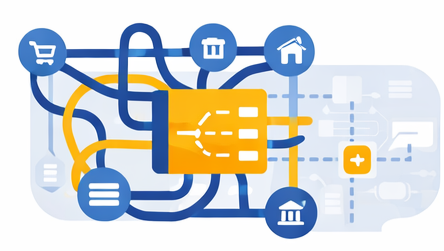
Integration debt isn’t about bad tools. It’s about too many tools talking to each other in fragile, one‑off ways.
It shows up when:
- A “quick” integration becomes business‑critical
- One person knows how a connection works—and no one else does
- Data looks different depending on which system you check
- Every new initiative starts with: “Okay, but how hard is this to integrate?”
At Northern Lights, we see this pattern constantly in mid‑market eCommerce environments. Not because teams made bad decisions—but because they made fast decisions under pressure.
The Problem Isn’t Point Solutions. It’s Point‑Solution Sprawl.
Let’s be clear: point solutions aren’t the enemy.
Best‑of‑breed tools often:
- Deliver faster ROI than big suites
- Solve very specific problems really well
- Let teams move without waiting on a massive platform upgrade
The problem starts when:
- Each tool introduces its own data model
- Integrations are built tactically instead of intentionally
- No one owns the system between the systems
That’s when complexity compounds—and progress slows.
The Real Cost of Integration Debt (It’s Not Just an IT Issue)
Integration debt doesn’t show up neatly on a balance sheet. It shows up in day‑to‑day friction.
1. Everything Takes Longer Than It Should
Launching a new channel. Testing personalization. Rolling out AI. Improving reporting.
None of these fail outright—but they all take longer because teams spend more time wiring systems together than delivering value.
2. Leaders Stop Trusting the Numbers
Marketing has one version of revenue. Finance has another. Ops has a third.
Instead of asking “What should we do?” leadership meetings turn into “Which number is right?”
3. Customer Experience Gets Inconsistent
Prices don’t match. Inventory looks available when it isn’t. Order status is unclear.
Not because teams don’t care—but because systems aren’t aligned.
4. Risk Concentrates in a Few People
When one or two individuals understand how key integrations work, turnover becomes a business risk—not just an HR issue.
So… When Should You Consolidate?
This is where many teams get stuck. Vendors push consolidation. Internal teams push back. Everyone’s nervous about disruption.
Here’s a simpler way to think about it.
Consolidation makes sense when:
- Multiple tools are solving overlapping problems
- Integration maintenance costs more than the features deliver
- Data delays or inconsistencies affect customer experience or decisions
- Total cost of ownership is rising faster than revenue
Best‑of‑breed still makes sense when:
- The tool provides real differentiation
- Integrations follow consistent patterns
- Ownership and governance are clear
- Swapping tools wouldn’t break the business
Key Northern Lights perspective: Consolidation should improve decision speed and clarity, not just reduce licenses.
Modern Integration Patterns That Actually Help
.png?width=500&height=333&name=Create%20a%20diagram%20of%20a%20well%20designed%20integration%20wo%20(1).png)
You don’t need a full architecture overhaul to reduce integration debt—but you do need better patterns.
A few we see working well:
- Event‑driven integrations
Systems publish what happened instead of constantly polling each other. Fewer breakages. More flexibility.
- Canonical data models
One shared definition of customers, products, and orders—so every system isn’t translating everything differently - Intentional use of iPaaS
Not “just another tool,” but a central place to monitor, reuse, and govern integrations. - Decoupled experiences
Front‑end flexibility without re‑wiring the backend every time something changes.
The goal isn’t perfection. It’s optionality—the ability to change tools without rewriting your business.
The Most Overlooked Fix: Governance (Not Bureaucracy)
Here’s the uncomfortable truth:
Technology doesn’t create integration debt. Lack of governance does.
Effective governance doesn’t mean slowing teams down. It means:
- Clear ownership of core data domains
- Standards for how integrations are built and documented
- Regular reviews of integration health
- A shared framework for approving new tools
When governance is done right, teams move faster—because changes are safer and more predictable.
A Simple Way to Start Simplifying (Without a Big Program)
You don’t need a multi‑year transformation to make progress.
Start with four steps:
- Map the stack
Systems, integrations, and data flows—especially the ones decisions depend on. - Identify decision pain
Where does data inconsistency slow leadership down? - Prioritize by business impact
Focus on revenue risk, CX impact, and operational drag—not technical elegance. - Simplify with intent
Consolidate where it improves clarity. Standardize where differentiation doesn’t matter. Invest where flexibility is critical.
The Bottom Line for eCommerce Leaders
Integration debt isn’t just an IT cleanup problem anymore.
It’s a growth constraint.
Organizations that tackle it proactively:
- Move faster with less risk
- Trust their data
- Deliver more consistent customer experiences
- Are better positioned for AI, personalization, and omnichannel growth
Those that don’t usually wait until change becomes unavoidable—and expensive.
Northern Lights Point of View
At Northern Lights, we help organizations turn complex digital ecosystems into decision‑ready environments. By focusing on customer intent, data clarity, and integration strategy—not just tools—leaders can simplify their stacks without slowing their businesses down.
Ready to Reduce Integration Debt?
Get a custom integration Health Snapshot for your eCommerce stack.
In a quick discovery, we'll help you identify where integration debt is slowing decisions, increasting risk, or limiting growth - and outline pratical next steps.