866-625-9377


November 10, 2026

-
Share:
-

-

-

-

 Growing organizations rarely suffer from a shortage of ideas.
They invest in technology modernization, operational improvements, AI initiatives, growth strategies, cybersecurity programs, customer experience improvements, and process optimization projects. Leadership teams spend months developing plans, approving budgets, and launching initiatives with great enthusiasm.
Yet many of those same initiatives stall, lose momentum, exceed budgets, or quietly disappear altogether.
Why?
In our experience, the answer is often not a lack of talent, funding, or effort.
It is a lack of executive ownership.
In fact, NorthernEdge's leadership readiness framework specifically emphasizes that every major initiative should have a single accountable executive owner because leadership capacity and accountability are frequently the missing link between strategy and execution.
Strategy Is Not Execution
Many organizations assume that once a strategic initiative is approved, execution will naturally follow.
Unfortunately, that rarely happens.
As projects move from planning to implementation, competing priorities emerge:
- Operational issues demand attention
- Customer requests increase
- Staffing challenges arise
- Budgets get reevaluated
- New opportunities appear
Without a dedicated executive champion driving the initiative forward, even important projects begin losing momentum.
The result is not usually a dramatic failure.
Instead, it is a slow decline in focus, accountability, and progress.
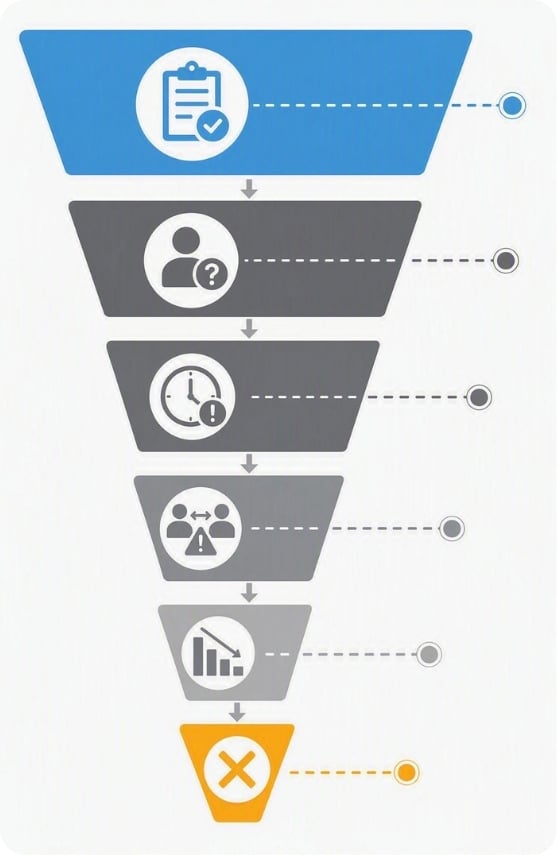
The Five Signs of Missing Executive Ownership
1. Nobody Truly Owns the Outcome
A project might have a project manager.
It might have department leaders involved.
It may even have a steering committee.
But when asked a simple question:
"Who is ultimately accountable for the success of this initiative?"
The answer is often unclear.
When ownership is shared among multiple people, accountability frequently becomes diluted.
Successful initiatives have one executive who is responsible for outcomes, decision-making, and removing obstacles.
2. Decisions Take Too Long
Every strategic initiative encounters unexpected challenges.
- Scope changes
- Budget concerns
- Technology issues
- Resource conflicts
- Vendor delays
Without executive ownership, decisions often sit unresolved for weeks.
The project team waits.
Progress slows.
Momentum disappears.
Executive owners provide direction, make trade-off decisions, and keep initiatives moving forward.
3. Initiatives Compete for Limited Resources
Most organizations have more priorities than capacity.
The challenge is not identifying opportunities.
The challenge is deciding which opportunities matter most.
Executive ownership ensures initiatives remain aligned with organizational goals and receive the attention they deserve.
Without clear ownership, projects compete against one another until everything becomes "high priority."
And when everything is a priority, nothing is.
4. Success Is Poorly Defined
Many initiatives launch without measurable outcomes.
Teams know what they are doing.
They are less certain about why they are doing it.
Executive ownership creates clarity around:
- Expected business outcomes
- Success metrics
- Financial impact
- Timeline expectations
- Risk management
When objectives are clearly defined, teams make better decisions and stay aligned.
5. Progress Is Measured by Activity Instead of Results
Organizations often report:
- Meetings held
- Tasks completed
- Documents created
- Milestones scheduled
But executive owners focus on a different question:
"Are we achieving the desired business outcome?"
A project can be busy without being successful.
Executive ownership keeps attention on results rather than activity.
The Executive Capacity Problem
Many small and mid-sized businesses understand the importance of executive ownership.
The issue is capacity.
A CEO may already be managing growth initiatives, customers, operational challenges, hiring decisions, and financial oversight.
Operations leaders are focused on day-to-day execution.
Technology leaders are balancing infrastructure, cybersecurity, modernization efforts, and support demands.
The need for ownership exists.
The bandwidth often does not.
That is why many growing organizations begin looking beyond traditional staffing models and evaluate fractional leadership support. NorthernEdge materials frequently highlight "leadership bandwidth" as a common challenge that slows strategic initiatives and business transformation efforts.
How Executive Ownership Accelerates Results
When a strategic initiative has a dedicated executive owner:
Priorities Stay Visible
The initiative remains part of leadership conversations rather than becoming an afterthought.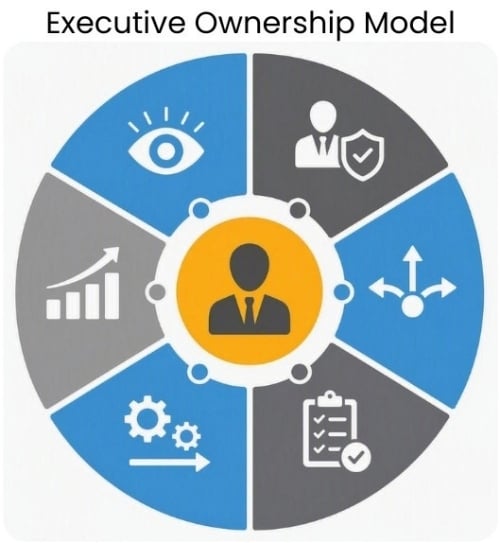
Decisions Happen Faster
Bottlenecks are addressed quickly before they delay execution.
Teams Stay Aligned
Departments understand goals, responsibilities, and expectations.
Risks Are Identified Earlier
Potential issues receive attention before becoming expensive problems.
Outcomes Improve
The organization focuses on measurable business value rather than simply completing tasks.
A Simple Leadership Test
Consider your three most important strategic initiatives right now.
Ask these questions:
- Does each initiative have one accountable executive owner?
- Is success clearly defined?
- Are progress reviews focused on outcomes rather than activities?
- Can decisions be made quickly when obstacles arise?
- Does the executive owner have sufficient capacity to lead the initiative successfully?
If any answer is "no," the initiative may already be at risk.
Final Thought
Most strategic initiatives do not fail because organizations lack vision.
They fail because ownership becomes fragmented, accountability weakens, and leadership capacity gets stretched too thin.
Execution requires more than a good plan.
It requires a leader who owns the outcome.
As businesses prepare for future growth, technology modernization, AI adoption, operational improvements, and transformation initiatives, one question becomes increasingly important:
Who owns the result?
Because when executive ownership is clear, strategic initiatives move faster, deliver better outcomes, and create lasting business value.
Need additional executive leadership bandwidth without adding a full-time C-suite salary?
NorthernEdge helps growing organizations assess leadership capacity, identify execution risks, and determine whether fractional executive support can accelerate strategic initiatives.
Schedule a complimentary Leadership Readiness Assessment and discover where executive ownership gaps may be impacting business performance.